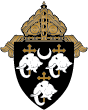
Bishop James T. McHugh
On May 21, 1989, it was announced that Auxiliary Bishop James T. McHugh of Newark had been appointed fifth bishop of Camden. He was installed on June 20, 1989.
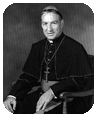
For his ten years in Camden, upholding the teachings of the Catholic Church in a society that too easily dismisses religion was of paramount importance. He was an ardent defender of the faith and of the sanctity of human life, and, as architect of the plan of the American bishops to promote all human life, has been called the “father of the pro-life movement in America.”
During his ten years in Camden, Bishop McHugh undertook a major reorganization of the diocese’s administrative structure and pushed to safeguard Catholic education. A diocesan synod process, in which thousands of Catholics came together in locations all over the diocese to have their say in the future direction of the Church of Camden, culminated in a three-day Synod event September 11-13, 1992, at Camden Catholic High School, Cherry Hill.
Bishop McHugh also authorized the relocation of the Diocese’s headquarters from Haddon Avenue to downtown Camden in 1998 in the PNC Bank building at Market and Broadway, directly across from the Cathedral of the Immaculate Conception, the Mother Church of the Diocese. It was in the midst of the move to the new offices that it was announced, on December 7, 1998, that Bishop McHugh had been appointed coadjutor of Rockville Centre. Until the appointment of a new bishop for Camden, he served as apostolic administrator of Camden.
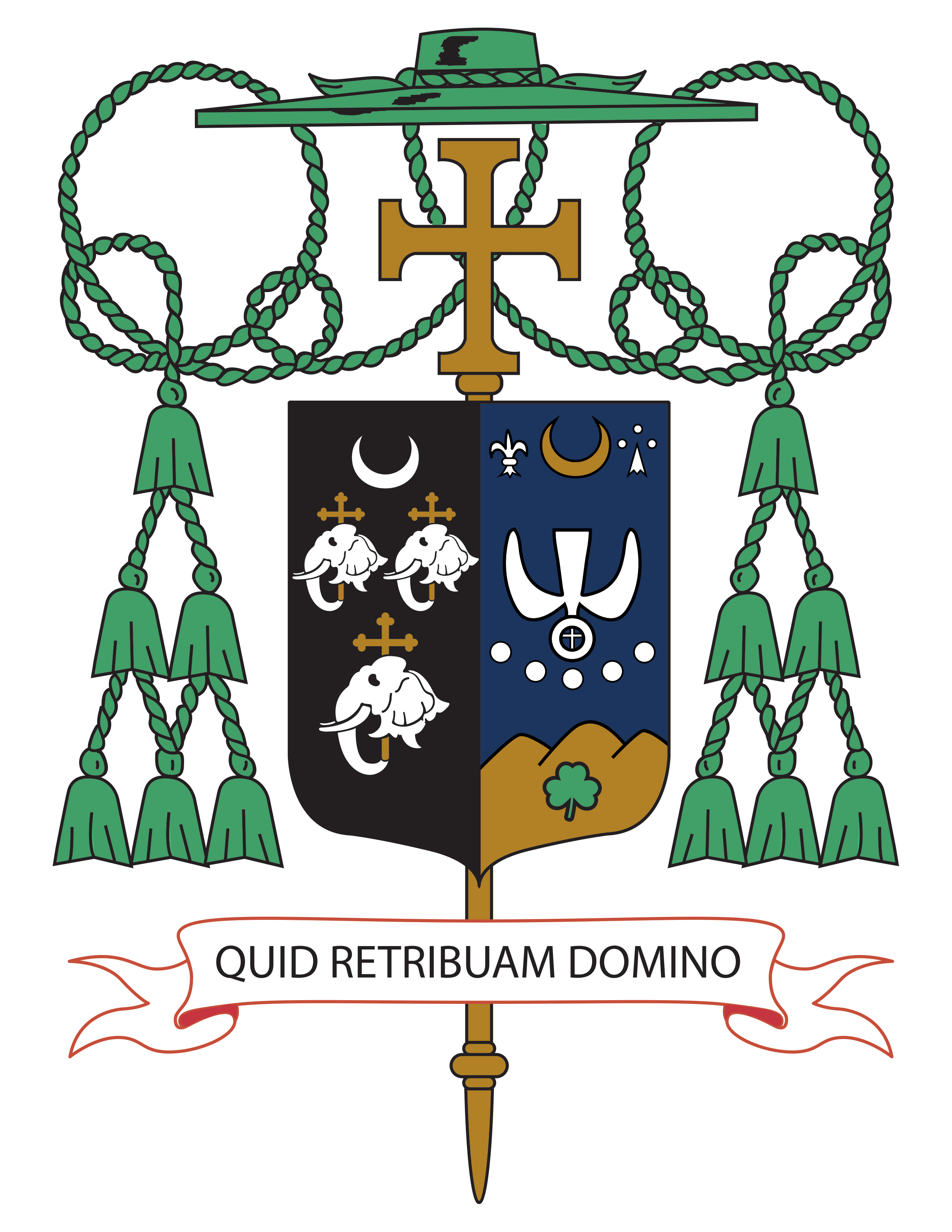
Blazon
Arms impaled. Dexter: Sable, three Latin crosses botonny or, debruised at their base with three elephant heads efased Argent, in chief a crescent of the last. Sinister: Azure, above five plates per arc, a stylized dove descending, the head being replaced with a roundel, voided of the field and charged cross formy Argent, to chief a crescent Or between to dexter a fleur-de-lis and to sinister an ermine spot of the second; issuant from base three mountains of the third charged with a trefoil Vert.
Significance
The episcopal heraldic achievement, or as it is more commonly known, the bishop’s coat of arms, is composed of a shield, with its charges, a motto scroll and the external ornaments. The shield, which is the central and most important feature of any heraldic device, is described (blazoned) in twelfth century terms as if it were being worn on the arm and is being viewed from the rear. Thus, it must be understood that the terms dexter and sinister are reversed as the design is viewed from the front. By heraldic tradition, the arms of a bishop of a Diocese are joined (impaled) with the arms of his jurisdiction, seen in the dexter impalement (left side) of the shield, in this case the Diocese of Camden. The three elephant heads signifying power, fidelity and wisdom, are from the coat of arms of Charles Pratt, first Earl of Camden and Lord Chancellor of England, for whom the city of Camden was named. In 1773 Jacob Cooper, a descendant of William Co-oper, who in 1681 had built a home just below the mouth of the Cooper River, laid out a town and named it in commemoration of Lord Camden, the friend and defender of the rights of the American colonies. The sense of justice prevailed so strongly in the Chancellor that the English government asked him to resign his high post, after one of his judicial decisions denounced the Stamp Act as a breach of the English Constitution, and declared taxation of the colonies without representation to be sheer robbery. The three golden crosses honor the Blessed Trinity: Father, Son and Holy Spirit. These crosses are what is known in heraldry as the “difference” because they differentiate the Camden diocesan coat of arms from that of the Earl of Camden. With this “difference” the significance of the qualities of power, fidelity and wisdom is transferred to the spiritual order. The crescent at the top center of the shield represents the Immaculate Conception, the title of the Cathedral of Camden and the title under which the Blessed Virgin Mary is venerated as patroness of the Diocese of Camden. For his personal arms, seen in the sinister impalement (right side) of the shield, adopted at the time of His Excellency’s election to be Auxiliary Bishop of Newark, New Jersey, Bishop McHugh has employed a design that brings together those elements of his priestly service that have had the most significance in his life. The design is based on the symbol of the dove, overshadowing five small circles, on a blue background. The dove represents the Holy Spirit and the five small circles represent the cells of life and family units. The model of the dove is taken from the pulpit of the Cathedral of the Sacred Heart in Newark. This symbol represents the Bishop’s pastoral work in the family life and pro-life movements in the Archdiocese of Newark and at the
BISHOP McHUGH, left, accepts the crozier from Archbishop Theodore E. McCarrick as Archbishop Pio Laghi looks on.
national and internabonai levels. Coming forth from the bottom of the impalement are three gold, rugged mountains, representing the mountains of the Potenza region of Italy, honoring the Italian heritage of his mother, Caroline Scavone McHugh. On these mountains is a green trefoil (shamrock), taken from the McHugh family arms, honoring the Irish heritage of the Bishop’s father, James Thomas McHugh. Above the dove is a gold crescent, from the device of the Archdiocese of Newark. The crescent is placed between a silver fleur-de-lis to honor the former Archbishops of Newark, Thomas Boland and Peter Gerety, as well as to signify the Dominican Order, from which the Bishop received his doctorate in Sacred Theology at the Pontifical University of St. Thomas Aquinas, Rome, and a silver ermine spot, taken from the arms of Archbishop Theodore E. McCarrick, whom Bishop McHugh served as an Auxiliary Bishop in Newark, who in turn took the charge from the arms of the late Terence Cardinal Cooke, with whom Bishop McHugh also worked for many years. For his motto, Bishop McHugh selected the Latin phrase “Quid retribuam Domino” (Ps. 116:12), which means “What shall I return to the Lord.” In this phrase, Bishop McHugh expresses his goal in life, to return to the Lord all that he can for all that he has been given by God, through His Son, Christ Jesus. The device is completed with the external ornaments which are a gold processional cross, which is placed in back of the shield and which extends above and below the shield, and a pontifical hat, called a gallero, with its six tassels, in three rows, on either side of the shield, all in green. These are the heraldic insignia of a prelate of the rank of bishop, by instniction of the Holy See of March 31, 1969.